Tuesday, 19 August 2014

The Pendle Witches


19 August 1612, condemned by her own 9 year old daughter, even though the evidence of a child was   inadmissible in Court under English law, Elizabeth Device and 13 others stand trial at Lancashire Assizes  accused of witchcraft. All bar one are found guilty - there always has to be at least one acquittal for any mass trial to be considered valid - and hanged the following day.

The Pendle Witch Trial was the largest ever held in England and at a time when people were beginning to have their doubts about such things. Even that old demonologist King James I had expressed his discomfiture at the ultimate sanction being imposed for such dabblings, genuine or not.

The fear of Witches and Witchcraft would be revived during the Civil War largely as a result of the activities of the so-called Witch-Finder General Matthew Hopkins, even if his motivation was money not not the eradication of maleficient magic from the impure air of war-torn England, but that is an entirely different story.


On 21 March, 1612, a young woman Alizon Device was making her way through Trawden Forest near Pendle Hill in Lancashire when she encountered a peddler by the name of John Law who was travelling from Halifax on business. Alizon was a “healer” and the granddaughter of Elizabeth Southerns, better known locally as Demdike, the matriarch of a family notorious for its beggary and for dabbling in witchcraft and magic. 

Upon seeing that John Law was a peddler Alizon seized the opportunity to do some begging of her own. She approached him and asked him for some pins. Pins were essential in the practice of witchcraft - for the treatment of warts, for divination, and of course for acts of maleficium, but they were also expensive.

It was never Alizon’s intention to pay for them and instead she implored Law to give her the pins for nothing. When he refused she became abusive, screamed and swore and appeared to curse him. Following their harsh exchange of words John Law continued on his way before he was seen to suddenly collapse.

He’d apparently had some kind of seizure. Nevertheless, he managed to struggle to his feet and stumble to a nearby Inn where he again collapsed. Witnessing this Alizon fled.

A few days later John Law’s son, Abraham, visited Alizon and demanded that she accompany him to visit his seriously ill father and lift the curse. He was in a poor way.  A doctor described his condition:

“His head is drawn awry, his eyes and face deformed, his speech not well to be understood, his arms lame, especially the left side.”

He was displaying all the symptoms of what we would diagnose now as a stroke.

Witnessing John Law’s condition, paralysed and struggling to breathe, Alizon  apologised for what she had done and begged his forgiveness. It was not forthcoming her apology being merely an admission of her guilt. John Law was to survive, but barely.

That Abraham Law had assumed from the outset that his father’s sudden illness must be the result of maleficium comes as no surprise. Lancashire at the time was a wild place that was considered by many to be almost outside the law.

It was still largely wedded to the old Roman Catholic faith and was thought to be a place of magic and superstition. It was considered unadvisable to travel there unaccompanied not only for reasons of physical attack but because witchcraft was believed to be so commonplace.

This had remained the case even though in 1562, during the reign of Queen Elizabeth I, Parliament had passed an Act against Conjurations, Enchantments and Witchcrafts. It effectively criminalised the practice of witchcraft for the first time and provided for the death penalty where harm could be proven to have been done. Even so, little effort had been made to enforce it in unruly Lancashire.


All this was to change on 24 March, 1603, when the 37 year old King James VI of Scotland was crowned King James I of England. He was a man who’d had a long and enduring interest in witchcraft. Indeed, he believed himself and his wife to have been a victim of it when storms were sent against a ship that was carrying him to Scotland.

A woman, Agnes Sampson was later garrotted for supposedly having conjured up these storms.

James regularly attended the interrogation and trial of witches and in 1597 he had written his book on the subject, Daemonologie. 

There was little doubt that he was a staunch believer in the existence and perniciousness of witchcraft, and of the necessity of rooting it out. He had written that it was the duty of people to denounce witchcraft where they found it and of the responsibility of the local authorities to prosecute practitioners of it.

By 1612 he had become a little more sceptical and his views had tempered somewhat. Even so, local Magistrates were well aware of the King’s abiding interest in the practice of witchcraft and were eager to do his bidding as they saw it. 

The Justice of the Peace for the area of Pendle was Roger Nowell. He was an ambitious man who had been busy prosecuting those who refused to attend Church of England services, then a criminal offence.

He had long been aware of the prominence of witchcraft in Pendle and when he received a complaint from Abraham Law regarding Alizon Device, he at last had the opportunity to prosecute it.

There were two families in Pendle who were particularly notorious for dabbling in witchcraft, the Device family also known as Demdike and the Whittle family also known as Chattox.

They were despised locally for their aggressive begging and were old rivals for the services they provided.

Thomas Potts, the Clerk of the Court, in his book The Wonderful Discovery of Witches in the County of Lancashire, 1613, described the matriarchs of both families.  Elizabeth Demdike he wrote:

 “Was a very old woman, about the age of four score years, and had been a witch for fifty years. She dwelt in the Forest of Pendle, a vast place, fit for her profession. What she committed in her time, no man knows. Thus she lived securely for many years, brought up her own children, instructed her grandchildren, and took great care to bring them up as witches. And certain it is, no man near them, was secure or free from danger.”

He then described Chattox:

 “This Anne Whittle, alias Chattox, was a very old, withered, spent, and decrepit creature, her sight almost gone, a dangerous witch of very long continuance; always opposite to old Demdike, for whom the one favoured the other hated deadly; and how they envy and accuse one another. Her lips were always chattering and walking, but no man knew what.”

On 30 March, 1612, Alizon Device, her mother Elizabeth and brother, James were summoned to appear before Roger Nowell to answer the accusations made by Abraham Law.

 Alizon Device, who was the only one of the Pendle Witches to truly believe in her own guilt quickly confessed to having sold her soul to the Devil and of calling upon her Master to lame John Law. Her brother James also testified to his sister being a servant of the Devil and of her ability to bewitch people. 

Elizabeth Device was more reticent in her testimony and only admitted to the fact that her own mother, Demdike, might possess something akin to the Devil’s Mark on her body.

Alizon Device did however take the opportunity to implicate the Chattox family. 

This she almost certainly did out of malice and revenge for in 1601 they had broken into the Device home at Malkin Tower and stolen all their goods. She also accused old mother Chattox of causing the death of her father whom she said was so frightened of her that every year he presented her with 8 pounds of oatmeal.

These confessions were elicited without the use of torture which was not permitted under English law until the accused had already been proven guilty. This in any case was merely a preliminary hearing and no charges had yet been brought. Nevertheless, Alizon Device was remanded in custody whilst Elizabeth and James were released.

On 2 April, Demdike, Chattox, and Chattox’s daughter Anne Redferne were also summoned to appear before Roger Nowell. Both Demdike and Chattox were in their eighties, nearly blind, and hard of hearing. 

They were vulnerable, easily intimidated, and both quickly confessed to being servants of the Devil. Chattox said that she had willingly sold her soul after being told that she:

 “Would not lack for anything and get any revenge she desired.”

 Anne Redferne refused to confess to any wrongdoing even though her mother had earlier said that she made clay models and stuck pins in them with the intention of doing people harm.

On the basis of the evidence provided Nowell had Demdike, Chattox, Anne Redferne, and Alizon Device committed to Lancashire Jail to await trial at the next Assizes charged with the crime of maleficium, or causing harm through witchcraft.

On 6 April, Elizabeth Device arranged a meeting at Malkin Tower, a rather grand name for what was little more than a ramshackle hovel, for those friends who wished to show their support for the accused members of her family while James Device stole a sheep to feed those in attendance.

When Roger Nowell learned of this he ordered that the events at Malkin Tower be investigated. As a result of the subsequent inquiry eight of those who attended the meeting, Elizabeth Device, James Device, Alice Nutter, Katherine Hewitt, John Bulcock, James Bulcock, Alice Gray, and Jennet Preston were arrested. 

What had been a minor case of local maleficium had now escalated into a full-scale witch hunt.

Those arrested for witchcraft in Pendle were tried alongside a group known as the Salmesbury Witches - Jane Southworth, Jennet Brierley, Ellen Brierley, Isobel Robey and Margaret Pearson the so-called Padham Witch.

It was to become known collectively as the Lancashire Witch Trials.

The two Judges charged with hearing the trial were Sir James Altham, a man nearing retirement but who was keen to make amends for having been accused of presiding over a mistrial; and Sir Edward Bromley who was eager for a promotion that would see him sent to London.

Jennet Preston who had attended the meeting at Malkin Tower was the first of the accused witches to come to trial on 27 July, 1612. As she resided in neighbouring Yorkshire her case was heard at York Assizes.

This was not the first time she had been put on trial for her life.

The previous year she had been accused of killing a child through witchcraft but had been found not guilty. 

This time the accusation was that she had caused the death of a prosperous local landowner, Thomas Lister.

It was stated in Court that when she had been taken to see the corpse of the dead man and touched it the corpse had:

 “Bled fresh blood, presently, and in the presence of all those present.”

She had earlier been implicated by James Device who said she had discussed the murder at Malkin Tower. She was found guilty and hanged on 29 July.

The Lancashire Assizes opened on 18 August and none of the accused could have been in any doubt of the fate that awaited them. The main witness in the case for the Prosecution was Elizabeth Device’s nine year old daughter, Jennet.

The evidence of a child was traditionally looked upon with some scepticism and was technically inadmissible in Court but the Judges decided that King James had made it plain that Witch Trials were to be considered an exceptional circumstance. 

They ruled that her evidence was to be treated as on a par with that of any adult.

Jennet was the daughter of Elizabeth Device by a man who was not her husband. As such she had always been treated separately from the other children as if she were the runt of the litter, and it was Jennet who identified those who had been in attendance at Malkin Tower, including Alice Nutter. 

The Court believed her even though it seemed unlikely that Alice Nutter, the wife of a wealthy local merchant and landowner would even deign to be seen with let alone frequent the homes of uneducated, unemployed beggars, but she was from a family of well-known local Catholic recusants and in the eyes of the Jury this alone would have been enough to condemn her.


Standing upon a table she now told the Court how her mother was a witch and was visited regularly by a large brown dog which was her familiar and that it had been sent by the Devil. Likewise, her brother James had a familiar that was a big black dog. 

As she gave her evidence her mother screamed at and cursed her from the dock. She accused her of lying, pleaded for her to stop, and shouted that she did not know what she was doing. So loud were Elizabeth’s screams that she had to be dragged from the Court.

Elizabeth Device was the only one of the accused who refused to be either intimidated or cowed by the Court. She pleaded her innocence throughout and never begged for forgiveness either from the Judges or from God. Indeed her aggressive attitude in Court was roundly condemned. 

Thomas Potts was to write of her:

 “This odious witch who suffered from a facial deformity that resulted in her left eye being lower than her right”.

 Her pleas of innocence did her no good and she was convicted of maleficium and sentenced to death, as was her son James. 

Elizabeth’s mother, Demdike, was likewise condemned to death though she seemed confused by the proceedings and was so hard of hearing that she could barely hear the charges brought against her or the sentence when it was read out. She was to beg forgiveness from God but accepted her fate with that degree of equanimity that often comes with old age.

Anne Whittle, Chattox, was accused of the murder of Robert Nutter. She pleaded not guilty of witchcraft but the confession she had made earlier in the presence of Robert Nowell was read out in Court.

After hearing this she broke down in tears, begged forgiveness from God and pleaded with the Court to be merciful to her daughter, Anne Redferne. 

On 19 August, Anne Redferne was tried for murder. Like her mother before her she pleaded not guilty but her mother’s earlier testimony that she had made clay models for the purpose of meleficient acts was again read out in Court.

Like Elizabeth Device before her she refused to confess and was the only one of the accused not to implicate anyone else. Regardless of this she was sentenced to death and condemned to hang. 

Alizon Device whose behaviour in Trawden Forest had started the entire train of events had believed in her own guilt all along. She was contrite for having done John Law harm and begged forgiveness from God for having been a witch but accepted her fate for she knew she must die.

On 20 August, 1612, at Gallows Hill in Lancaster, Elizabeth Device, Alizon Device, James Device, Anne Whittle, known as Chattox, Anne Redferne, Alice Nutter, Jane Bulcock, John Bulcock, and Katherine Hewitt, known as Mould-Heels, were hanged.

They were joined by the Salmesbury Witches, Jennet Bierley, Ellen Bierley, Jane Southworth, and John Ramsden. Old Demdike had died earlier in captivity. Collectively they had been accused of sixteen murders by witchcraft over many years. 

 Three of those arrested were later released without charge and one defendant Alice Gray was found not guilty.

The trial and execution of the Pendle and Salmesbury Witches was an unusual phenomenon in England where those convicted of witchcraft and sentenced to death had remained in the hundreds over the centuries even at a time when the Witch Craze was sweeping across Europe. Some of those hanged at Pendle were convicted of little more than guilt by association or for attending the meeting at Malkin Tower.

The trial had been driven by ambitious men, particularly Roger Nowell and Sir Edward Bromley who were seeking to ingratiate themselves with the King by being seen to clean up an area notorious for its lawlessness and high levels of Catholic recusancy. As such they were willing to largely rely upon the witness statement of a nine year old girl which was unprecedented in English law and this at a time when attitudes towards witchcraft were beginning to change and more and more of those brought before the Courts were being acquitted.

Even King James whose interest in the subject of witchcraft was well-known had recently voiced his scepticism and had declared that the evidence provided in such trials should undergo rigorous examination.

Of the Judges who presided at the trial, Sir James Altham never truly restored his reputation from the previous mistrial and his reliability and honesty remained suspect for the rest of his life. He died in 1617. 

Sir Edward Bromley was never promoted to the London Circuit of Judges. Likewise, Roger Nowell never rose in the ranks of Government service to which he aspired. 

On 24 March, 1634, Jennet Device, the nine year old girl, upon whose evidence so many of her family and their friends were hanged was herself arrested for witchcraft. It is known that she was still in prison as late as August, 1636, though her eventual fate remains a mystery.

*** See Related Articles: 

 Matthew Hopkins; The Witch-Finder General

The Salem Witch Trials

At:   www.prisonersofeternity.co.uk


Sunday, 17 August 2014

Queen Elizabeth I's Dark Secret?


Was Queen Elizabeth I in reality a transgender man,or possibly a hermaphrodite?

She was far taller than the average at 5'9", she had large hands and feet, and extraordinarily long fingers, and many of her portraits display distinctly masculine features.


Did she hide her face behind thick layers of white makeup to disguise stubble?
Did she wear high collars to conceal an Adam's Apple?


She wore wigs throughout most of her life and in old age was entirely bald.

Upon her death she ordered that no medical examination of her body should take place and that under no circumstances must it be embalmed.


Is this the reason she never seriously contemplated marriage? Is this the reason she remained the Virgin Queen?

It has long been rumoured, and is just a thought.


Monday, 11 August 2014

The War Poets: Sassoon, Brooke, and Owen

“Good morning, good morning! The General said
When we met him last week on our way to the line.
Now the soldiers he smiled at are most of ‘em dead,
And we’re cursing his staff for incompetent swine.
‘He’s a cheery old card’, grunted Harry to Jack
As they slogged up to Arras with rifle and pack.

But he did for them both with his plan of Attack.


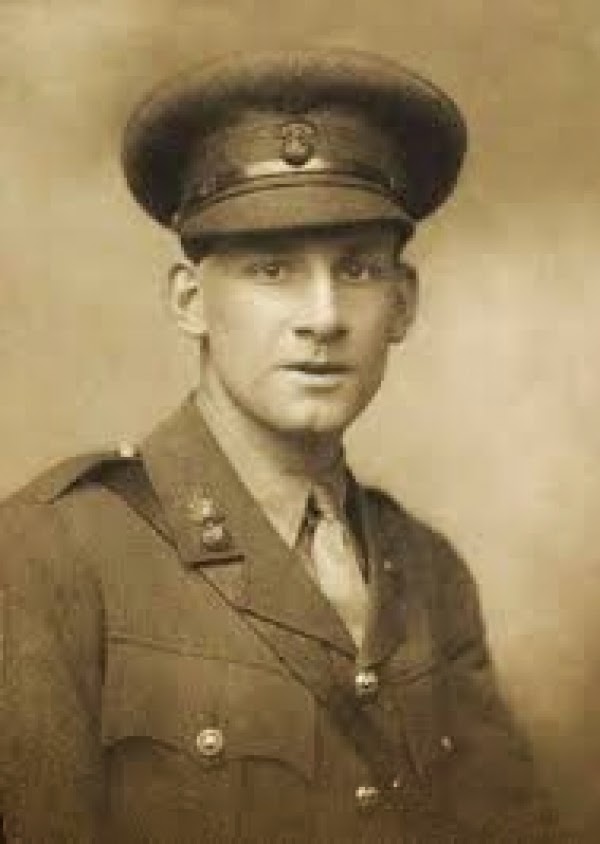
Siegrfied Sassoon was born into a life of wealth and privilege and in the years preceding the outbreak of war he felt no obligation to attain either academic achievement or pursue a career but instead preferred the life of a country gentleman, riding out, playing golf, and indulging his great passion - poetry. 
 
But like most young men of his background he had a sense of duty and a deep if  sometimes subdued patriotism and as war appeared imminent he enlisted in the Sussex Yeomanry and trained as an Officer receiving his Commission the in May, 1915.

In November he received the tragic news that his much loved younger brother Hamo had been killed at Gallipoli.

The loss affected him greatly but served only to make him push harder for a front-line posting which he finally received in March, 1916.

Sassoon was to prove an exceptional Officer both dedicated to and protective of the men under his command but he was also a conflicted man - confused by his latent homosexuality that saw bonds of affection develop with fellow Officers that might not otherwise have been the case, and he was similarly bewildered by his physical commitment to a war on the battlefield that he was fast becoming disenchanted with in his heart.

Nevertheless, he was brave to the point of recklessness earning him the nickname “Mad Jack” and in May 1916, whilst leading a night-time raid into No-Man’s-Land his courage in rescuing a fellow soldier saw him awarded the Military Cross.

After participating in the Battle of the Somme he was struck down by a severe bout of dysentery and briefly repatriated home and it was now among friends and family that he first began to express his doubts about the war.

It was on visits home that he would become maudlin and despondent as if amid the mud and the blood of the trenches he could lose himself as a man of action in defence not just of his country but the men under his command, venting his anger on the enemy and sating his melancholy in the written word.

But in the peace and tranquility of hearth and home he could see with unvarnished eyes the panoramic vistas of insanity. 
 
In April 1917, he was shot by a sniper and was once again repatriated to England for a period of convalescence where encouraged by those such as the philosopher Bertrand Russell and Lady Ottoline Morrell and the Garsington Pacifists he was encouraged give voice to his disillusionment.

Given the possible consequences for Sassoon of doing so these people should not perhaps be considered friends and it has been suggested that they exploited him for their own ends, but if so it appears he was a willing victim. 

Having already disposed of his Military Cross by throwing it into the sea on 15 June he wrote his famous Soldier’s Declaration against the war which he sent to his Commanding Officer, and which was read out the following month in the House of Commons and later published in The Times Newspaper:

“I am making this statement as an act of wilful defiance of military authority, because I believe that the war is being deliberately prolonged by those who have the power to end it.

I am a soldier, convinced that I am acting on behalf of soldiers. I believe that this war, upon which I entered as a war of defence and liberation, has now become a war of aggression and conquest. I believe that the purposes for which I and my fellow soldiers entered upon this war should have been so clearly stated as to have made it impossible to change them, and that, had this been done, the objects that actuated us would now be attainable by negotiation. 

I have seen and endured the sufferings of the troops, and I can no longer be a party to prolong these sufferings for ends which I believe to be evil and unjust.

I am not protesting against the conduct of the war, but against the political errors and insincerities for which the men are being sacrificed.

On behalf of those who are suffering now I make this protest against the deception which is being practised on them; also I believe that I may help to destroy the callous complacence with which the majority of those at home the continuance of agonies which they do not share and which they have not sufficient imagination to realise”.

In a war where any dissent from the front-line was frowned upon and Sassoon himself would have regularly censored the letters of his men this was borderline treason.

His friend, the author Robert Graves fearing that he would be court-martialled urged him not to do it.

He had experienced first-hand how the death of Siegfried’s younger brother had impacted upon the family, describing in his memoir of the war “Goodbye, to All That”, how when staying a night in the dead brother’s bedroom which had remained unaltered since his death with fresh flowers provided every day and his favourite cigarettes on the bedside table, being woken in the early hours of the morning by the rapping sounds and peculiar wailings of a séance.

Sassoon’s mother later apologised for having disturbed him.

He now feared that Siegfried was about to inflict further grief on the family so he used his connections to interceded on his behalf.

The Military Authorities sensitive to morale at home were prepared to listen and rather than consider him a traitor and prosecute a well-known war hero he was instead diagnosed as having been rendered mentally and emotionally unstable as a result of sustained front-line service and possible shell-shock
.
He was sent to the psychiatric hospital at Craiglockhart near Edinburgh to receive psychotherapy, a fairly new treatment also known as the “talking cure”.

At Craiglockhart he became friends with the fellow Officer and poet Wilfred Owen who was there also recovering from the effects of shell-shock.

Sassoon was to remain at Craiglockhart for a number of months but endured an increasing sense of guilt that whilst he lived in comfort and talked literature and poetry late into the night his men continued to suffer and die on the Western Front.

His subsequent request to return to front-line duties was accepted.  

By the spring of 1918 he was back in France in time to resist the Germans last great offensive in the war.

Ironically, given the many risks he had taken throughout the war on 13 July he was shot in the head possibly as the result of friendly fire and invalided out of the army.

The years immediately following the end of the war were a troubled time for Sassoon as once more immersed into a life of privilege so far away from the horror of the trenches and those who fought alongside him who now endured unemployment and increased poverty, he embarked upon a series of homosexual affairs with young men who had no understanding or even concern for the pain suffered by those who were their seniors of just a few years.

It only served to damage him further.
   
In 1933, he married Hester Gatty, a woman many years his junior, which at least provided some stability in his life and a son whom he adored, and though they were later to separate it was to prove a signal and transformative moment.

Siegfried Sassoon who had survived the worst of trench warfare in the most horrific conflict then known to man lived to old age during which time he converted to Roman Catholicism and renewed his interest in spiritualism.

He was also to write his semi-fictional sketches from the front, one of the great testaments of the war, and continue to produce well-received poetry all his life but it will always be his wartime verse for which he is best remembered and admired.  

For a man who had been so emotionally engaged with the war, with its people, and the events occurring around him, Sassoon’s poetry has a disturbingly dispassionate and matter-of-fact quality that resonates with the gravity of resignation and despair.

It has an earnestness lacking in so many others, an acid-tongued cynicism that slices through the solemnity and maudlin introspection of regret and loss that lights up the fog of despondency but barely and without relief: 

“I knew a simple soldier boy,
Who grinned at life in empty joy,
Slept soundly through the lonesome dark,
And whistled early with the lark.

In winter trenches, cowed and glum,
With crumbs and lice and lack of rum,
He put a bullet through his brain.
No one spoke of him again.

You smug-faced crowds with kindled eye
Who cheer when soldiers march by;
Sneak home and pray you’ll never know
The hell where youth and laughter go”.

(Suicide in the Trenches)


Rupert Brooke

The 27 year old Rupert Brooke was already an established poet feted by the literati and those such as the Bloomsbury Set before the outbreak of World War One, though he was as much admired for his boyish good looks as he was his literary abilities attracting in equal measure the attention of both men and women, which caused him some early confusion.

He was the son of a Master at Rugby Public School and had a sheltered, if not gilded childhood, but one which allowed him to dream and his dreams of an idyllic England were ones he expressed in his poetry, though always with wit and humour.

His was not an England of ship-building, blast furnaces and mines but one of panoramic vistas, country Churches, and lakes glimmering in the summer sun.

When the opportunity came to fight for his rural idyll he embraced it and he is looked upon with scorn now by some critical of his unquestioning belief in country and unbridled patriotism.

But Brooke never lived long enough to experience the meat-grinder war of the Western Front and his idealistic verse reflected the feelings of many swept up in the enthusiasm of those early months of the war.

Brooke’s connections ensured that even with no military experience, or indeed the required training, he was commissioned as a sub-Lieutenant in the Royal Navy Reserve but the patriotic Rupert’s war was to be a short one.

On 23 April 1915, he died in delirium en-route to Gallipoli from the effects of a mosquito bite.

“If I should die, think only this of me:
That there’s some corner of a foreign field
That is forever England. There shall be
In that rich earth a richer dust concealed;
A dust whom England bore, shaped, made aware,
Gave, once her flowers to love, her ways to roam,
A body of England’s, breathing English air,
Washed by the rivers, blest by the suns of home.

And think, this heart, all evil shed away’
A pulse in the eternal mind, no less
Gives somewhere back the thoughts by England given;
Her sights and sounds; dreams happy as her day;
And laughter, learnt of friends, and gentleness,
In hearts at peace, under an English heaven”.

(The Soldier)


Wilfred Owen

Born in the small market town of Oswestry on the border of England and Wales into a solid middle-class family that espoused the traditional values of sobriety, hard work, belief in country and the established social order, the young Wilfred Owen also immersed himself in his Welsh heritage especially the stories of the Bards and from an early age he expressed his desire to be a poet. 

Owen was resident in Southern France where he had taken a teaching post when war was declared but unlike Brooke and Sassoon he displayed no great desire to become involved.

Indeed, it seemed as if the war was occurring in some far-away place and had passed him by, and it wasn’t until late October, 1915, that he at last out of a sense of guilt returned to England to enlist for Officer training in the First Artists Rifles.

Commissioned as a Lieutenant he spent the first year of his service in England where he came to like the feel of his uniform and certainly the respect that seemed to come with it.

He was sent to the France on 31 December, 1916, but he had little time with which to dwell upon his new surroundings for within the week he had been transferred to the front-line fully experiencing its rich panoply of horrors – the constant shelling, the rat-tat-tat of the machine gun, the fear of the ever-present sniper, and the dread of gas.

The brutality of it all, and the fact that there were people out there who wanted to kill him, came as a profound shock.

It was all a little too much for the dream-like Owen who began composing the first of the more than 650 letters he was to write home to his mother complaining of the filth and dreariness of it all and of the contempt he had for the dullards under his command whom he described as unimaginative lumps. 

The difference in attitude towards the common soldier with whom they served of the aspirational middle-class Owen and the more aristocratic Sassoon was stark, though Owen’s opinion would change over time.

Having had more than one brush with death in April, 1917, Owen was blown high into the air by a trench mortar which left him with severe concussion. Badly shaken he was diagnosed as suffering from shell-shock and evacuated back to England where he found himself at Craiglockhart at the same time as Siegfried Sassoon.

The two men quickly became close friends spending long nights together discussing poetry during which time Sassoon, whom Owen admired greatly describing him as great, or even greater, than Shakespeare, encouraged him to write and write.

Owen was to act on his friend’s advice and almost all of the poetry we now remember him for was written in the fifteen months of life he had remaining to him.

His shell-shock meant that he could have completed his military service in England and despite Sassoon threatening him with violence if he did so he followed the example previously set by his friend and volunteered to return to the Western Front to be with his men. 
 
In July 1918, he returned to active service in time to participate in the Allied push towards final victory.
On 4 November 1918, he was leading his men in a crossing of the Sambre-Oise Canal when he was shot and killed.

On 11 November, as the Church bells in England rang out at the announcement of the Armistice and people took to the streets to celebrate the end of the war, Owen’s parents received a knock on the door and the telegram informing them that their only son had been killed in action a week earlier. 

In 1919, in recognition of the great courage and endeavour he displayed in leading his men in a series of actions the previous autumn he was posthumously awarded the Military Cross.

Wilfred Owen is acknowledged by many to have been the greatest of the war poets more adroit and technically gifted but also more adventurous in his use of language experimenting with rhyme and vowel sounds to recreate the intense suffering of the common soldier often with a simplicity of language that reflected the simple sense of duty upon which they had entered the fight and endured its torments.:

“Bent double, like old beggars under sacks’
Knock-kneed, coughing like old hags we cursed through the sludge,
Till on the haunting flares we turned our backs,
And towards our distant rest began to trudge.
Men marched asleep. Many had lost their boots,
But limped on, blood-shot. All went lame, all blind,
Drunk with fatigue, deaf even to hoots
Of gas-shells dropping softly behind.

Gas! Gas! Quick boys! – an ecstasy of fumbling
Fitting the clumsy helmets just in time,
But someone still was yelling out at stumbling
And floundering like a man in fire or lime –
Dim through the misty panes and thick green light,
As under a green sea, I saw him drowning.

In all my dreams before my helpless sight
He plunges at me, guttering, choking, drowning.

If in some smothering dreams, you too could pace
Behind the wagon that we flung him in,
And watch the white eyes writhing in his face
His hanging face, like a devil’s sick of sin,
If you could hear, at every jolt, the blood
Come gargling from the froth-corrupted lungs
Bitter as the cud
Of vile, incurable sores on innocent tongues –
My friend, you would not tell with such high zest
To children ardent for some desperate glory,
The old lie: Dulce et decorum est
Pro patria mori.

Siegfried Sassoon, Rupert Brooke, and Wilfred Owen are all honoured with a plaque at Poet’s Corner in Westminster Abbey.


Saturday, 9 August 2014

Queen Elizabeth I: The Tilbury Address


On 8 August 1588, Sir Francis Drake engaged the Spanish Armada at Gravelines having earlier used Fireships, the dreaded Hell-Burners crammed full of gunpowder and pitch to break their formation at Calais and force them back into the open sea.

Smaller and more manoeuvrable than their larger Spanish opponents the English ships harried and harassed the Armada throughout a frantic day of fighting that saw them close, fire their volleys, and withdraw before the Spanish could close and use their preferred tactic of boarding.

The Armada’s heavy guns were also slow to fire, in some cases as little as one round an hour, and the low trajectory of English fire had also meant that many of their experienced gunners had been killed early in the battle slowing their rate of fire even further.

Harassed beyond endurance the Armada could now perceive its own vulnerability and so with the wind and tides in its favour it broke off the battle and withdrew.

The Spanish had lost ships and the Battle of Gravelines was an undoubted English victory but it did not at the time appear to have been a decisive one, though its outcome had sown the seeds of doubt in the mind of the Armada’s commander, the Duke of Medina Sidonia.

As news of Sir Francis Drake’s victory filtered through to the English Court it was greeted with a sense of relief but one tinged with disappointment for the Armada had not been destroyed and the threat of invasion remained.

Queen Elizabeth I, who often absented herself at times of crisis, would on this occasion with her throne and her very life at stake play a pivotal role in the campaign.

She was preparing to address her troops gathered at Tilbury - a rag-tag army of volunteers and those forced into service poorly trained and ill-equipped that inspired little confidence.


Similarly, the army’s commander, Robert Dudley, Earl of Leicester, the Queen’s old suitor was ill-considered as a General. He had not acquitted himself well during his campaign in the Netherlands and he was also a sick man but he understood the value of propaganda and it was he who had orchestrated the set-piece meeting at Tilbury. 

Few thought that if the Armada could not be defeated at sea the Spanish Army, the finest in Europe and under the command of the able and admired Duke of Parma, could be beaten on land, and to believe so was a forlorn hope.


But Elizabeth would not countenance such talk and exuded confidence in both her army and the Earl of Leicester, in public at least.
   
On the morning of 9 August, riding a white charger and dressed for war in a steel breastplate and with sword at her side she rode among and between her squadrons accompanied by Leicester, the Earl of Essex, and the Lord Marshall.

Then as the men gathered round at a respectful distance Elizabeth rode forth from her entourage alone:


“My loving people, we have been persuaded by some that are careful of our safety to take heed how we commit ourselves to armed multitudes, for fear of treachery; but I assure you I do not desire to live to distrust my faithful and loving people. Let tyrants fear. I have always so behaved myself, that under God, I have placed my chiefest strength and safeguard in the loyal hearts and goodwill of my subjects, and therefore I have come amongst you, as you see at this time, not for my recreation and disport, but being resolved in the midst of the heat of battle, to live and die amongst you all, to lay down for my God, and for my Kingdom, and my people, my honour and my blood, even in the dust.

I know I have the body of a weak and feeble woman, but I have the heart and stomach of a King, and a King of England too, and think foul scorn that Parma or Spain, or any prince of Europe, should dare to invade the borders of my realm, to which rather than dishonour shall grow by me, I myself will take up arms, I myself will be your general, judge, and rewarder of your virtues in the field.

I know already for your forwardness you have deserved rewards and crowns: and we do assure you on the word of a Prince, they shall be duly paid. In the meantime, my Lieutenant-General shall be in my stead, than whom never prince commanded a more noble or worthy subject, not doubting but by your obedience to my General, by your concord in the camp, and your valour in the field, we shall shortly have a famous victory over these enemies of my God, of my Kingdom, and of my people”.

For those unable to hear her words pre-prepared texts were distributed to Officers to repeat to their men the following day, and to priests to be read from the pulpit.

It had been a brave thing for Elizabeth to do aware that a Catholic assassin would have the blessing of his Church but she knew the gravity of the situation.

To what extent Elizabeth’s Tilbury Address had stiffened the resolve of her army would never be put to the test, though this remained unknown at the time.

The Battle of Gravelines the previous day had convinced the Duke of Medina Sidonia to abandon his plans to link up with the Duke of Parma’s Army and instead return to Spain sailing via the tip of Scotland and the Irish Sea.

They were heading straight into some of the worst storms in living memory and it was not to be Sir Francis Drake who destroyed the Spanish Armada but a Protestant Wind as Galleons were swamped by the huge waves, ripped apart on the rocks, or forced to beach on the Irish coast where expecting a warm welcome from their fellow Catholics their crews were set upon and massacred.

Of the 120 ships under the Duke of Medina Sidonia’s command 55 were lost and 5,000 men drowned or murdered whilst those that limped home were in such a state of disrepair as to be rendered virtually useless and the men so diseased that many only had a short time to live.

The Earl of Leicester did not live to glory in the destruction of the Spanish Armada dying on the 4 September, but Elizabeth did.

If pleading her innocence to her half-sister Mary following accusations of treason thirty years earlier had been the defining moment of Elizabeth’s life then her address to the army at Tilbury was the defining moment of her reign.

The Virgin Queen had become the Virgin Gloriana.


Sunday, 3 August 2014

Polari: The Language of Gay London


Polari (from the Italian Parlare, to speak) was the language of the English subculture. It was used throughout the country but mainly in London where it was spoken by market traders, in fairgrounds, at dog tracks, and by the criminal fraternity. But it was to be amongst the homosexual community that it really took a hold.

Polari emerged in the late eighteenth century as a mixture of cockney rhyming slang and the many different languages that were spoken in immigrant London at the time and as the policing of the city became more rigorous and systematic so did the devices adopted by those wishing to evade it, and language was one of them.

There were also variations of Polari within London itself with that used in the East End based on the slang of the dock workers and canal boat men and the language used by the large homosexual community resident in the West End who often used theatrical and music hall references. The two were eventually to crossover and merge but whereas its use would decline in general as time wore on it would continue to develop and flourish within the homosexual community. 

Prior to the Sexual Offences Act of 1967, to have a same sex relationship or have a same sex encounter was a crime. It was also an offence that the police took particular relish in prosecuting, and Polari soon became a second language used by homosexuals to stay one step ahead of the law.

Such was the stigma attached to it that to be arrested for a homosexual offence could destroy careers and break lives, and for many homosexual men marriage was a means whereby rumours about ones sexuality could be denied and gossip deflected.

This was an unhappy convenience that for many gay men did not even exist as an option. More overtly effeminate men were often the subject of whispered allegations and worse, and were particularly vulnerable to police harassment and it was amongst this group that the use of Polari became increasingly commonplace.

Amongst the upper-classes homosexuality was largely turned a blind eye to and even indulged as long as those who practised it behaved with a modicum of discretion and were not caught in flagrante delicto.

This was not the case for the middle classes and those who worked in the professions. Throughout the 1950's and early 1960's numerous barristers, teachers, doctors and prominent businessmen were arrested and saw their careers ended as a result of a homosexual indiscretion. It was also common for a wife aware of her husband’s homosexuality to cover up for him to preserve the standard of living for herself and her children that only her husband could provide. Particularly as this was a time when far fewer women worked and those who did were often employed in low paid jobs devoid of prospects.

Within the working class homosexuality was simply unacceptable. Anyone accused of a homosexual act would face being abandoned by their family, ostracised by their local community, and be in constant fear of violent assault. They were effectively run out of town.  

Known homosexuals would also often be rounded up for random questioning whenever a sexual crime had been committed against a minor, on the grounds that as "perverts" they were always likely suspects.

The decade prior to the 1950's had been a boom time for sexual activity of all kinds. The war years had witnessed a breakdown in the strict moral code that had governed the behaviour of people since the Victorian era and it provided ample opportunity for people to indulge their sexual predilections with little fear of being caught.

The number of young sexually active young men, often from abroad, in uniform on the streets of Britain's cities and looking for a good time increased beyond measure. The Black Out ensured security to the point where you could often not even see who you were having sex with. As a result there was a sharp increase in gay and transvestite prostitution, and there was to be many a soldier who was not only fleeced of his money but found himself the recipient of more than he had bargained for.

Quentin Crisp, the future author, raconteur, and actor, who had been turned down for military service on the grounds that he suffered from a sexual perversion wrote of his happiness during the war years as he took advantage of the many thousands of young men abroad and away from the restraints of home who were able to express their new-found sexual freedom with impunity for the first time.

Homosexuals did of course serve in the Armed Forces during the war and for many it was to be the first time they had encountered some degree of, if not acceptance, then toleration. The other men in the Unit would invariably have been aware of who amongst them was gay and though they could often be patronised, such as being made the Company mascot, they were generally tolerated and often even protected by their comrades. When faced with the prospect of death another's sexuality hardly seems to matter.

In the Prisoner-of-War Camps the more effeminate homosexual men would often play the female roles in the shows that were put on to entertain their fellow prisoners. Known as the girlfriends, they were rarely without boyfriends.

The Military Authorities in the main turned a blind eye to homosexual activity within the Armed Forces. If it could be swept under the carpet then all well and good, it was after all a time of war and of all hands to the pump.

It was widely assumed that homosexual men were by nature weak and cowardly with a propensity to hysteria but many had displayed outstanding courage and had finished the war with distinguished service records.

The war years were to break down a great many social barriers and prove the lie to a great many myths, but it would be wrong to think that everything was rosy in the garden. Homosexual men were still court-martialled, drummed out of the service, and on occasions imprisoned.  

The coming of peace however saw a crackdown on the licentiousness of the war years and the moral code that had briefly been removed was very quickly re-imposed.

The Authorities were eager to halt what they perceived to be the slide into moral decay. Their weapons of choice were to be the Law and the Police. Censorship was enforced in the theatre, many nightclubs were closed down, and homosexuality was again forced underground.

Among those prosecuted during this period was the brilliant mathematician and computer scientist Alan Turing. He had been awarded the O.B.E for his pivotal work at Bletchley Park during the war in cracking the German Enigma Code.

In January, 1952, he reported a man, Arnold Murray, whom he had met in Manchester to the Police for breaking into his home. During their investigations however the Police discovered that Turing and Murray had in fact been lovers. Both men were subsequently charged with indecency under Section II of the Criminal Law Amendment Act of 1885, the same law under which Oscar Wilde had been prosecuted.

Found guilty, rather than go to prison Turing chose to undergo a course of chemical castration. Despite agreeing to undergo a course of treatment that was still in its experimental stage, Turing saw his life ruined. He lost his job at G.C.H.Q (the centre for British Intelligence gathering). His attempt to continue his work abroad was aborted when he was refused entry to the United States. The humiliation of his situation he found unable to endure. On 8 June, 1954, he committed suicide by taking a bite from an apple laced with cyanide.  

Another prominent figure to fall foul of the law was the recently knighted actor Sir John Gielgud. In 1953, he was arrested for cottaging in a Chelsea public lavatory.

Convicted of lewd behaviour many people, himself included, thought it heralded the end of his career. But Sir John was from an old and distinguished theatrical family and the profession rallied around him. Even so he avoided public appearances and even turned down movie roles for a great many years to come. He later admitted to feeling personally humiliated by the experience for the rest of his life.

Homosexuality had once again been reduced to a clandestine activity committed in the dead of night, in parks, on street corners, and at bus shelters. But to those within the homosexual community, to those in the know, there were the locked basement rooms of nightclubs and the secret partitions in pubs.

The Turing case had shown that even sex between consenting adults in the privacy of one’s own home was no bar to prosecution. Neither was fame, fortune, or reputation. Secrecy was paramount, and many prominent people including Noel Coward, Cecil Beaton, Benjamin Britten, and Siegfried Sassoon among them lived in constant fear of being exposed.

So the 1950's saw a revival in the use of Polari, many words of which, such as, blag, barney, clobber, khazi, naff, scarper, and strides have since become part of our common language and it was used to pull the wool over the eyes of the police and was a means by which gay people could both recognise and acknowledge one another and communicate outside of their usual haunts.

It become more widely known to the public at large when a segment of the popular radio show Around the Horne was devoted to Julian and Sandy, two overtly camp men played by the actors Kenneth Williams and Hugh Paddick who regularly used Polari in their sketches.

Polari began to go out of fashion following the Sexual Offences Act of 1967 and the decriminalisation of homosexuality. This had resulted from a series of Private Members Bills that were passed into law by the Labour Home Secretary Roy Jenkins. It legalised same gender sex for consenting adults aged over 21. With the effective legalisation of homosexuality the need for Polari and for homosexuals to have a secret language all of their own ceased to exist.

A Brief Glossary of Polari Words and Expressions:

1)  Alamo – Hot For
2)  Aunt Nell’s - Ears
3)  Aunt Nelly Fakes – Earrings
4)  Barney - Fight
5)  Basket – Male Genitalia
6)  Bibi – Bisexual
7)  Blag – Pick Up
8)  Bod - Body
9)  Bona - Good
10) Bona Drag - Good Outfit
11) Bona Nochy - Goodnight
12) Bonaroo – Wonderful
13) Bungery - Pub
14) Butch – Masculine
15) Cackle - Gossip
16) Camp – Effeminate
17) Carto - Penis
18) Charpering Omi – Policeman
19) Chicken – Young Man
20) Clobber - Clothes
21) Dilly Boy - Male Prostitute
22) Dish - Buttocks
23) Dolly - Pretty
24) Dona – Woman
25) Dorcas - Darling
26) Doss - Bed
27) End - Hair
28) Fantabulosa - Fabulous
29) Esong – Nose
30) Fruit - Queen
30) Handbag – Money
31) Jubes - Breasts
32) Lallies – Legs
33) Lilly Law – Police
34) Naff - Awful
35) Mince - Walk Affectedly
36) Ogle - Look
37) Omi Palone - Effeminate Man
38) Orbs – Eyes
39) Palliass - Back
40) Palone Omi - Lesbian
41) Scarper - To Run Off
42) Screech – Speak
43) Sharpy Polone – Policewoman
44) Slap - Makeup
45) Strides - Trousers
46) Switch - Wig
47) Trade – Sex
48) Vera Lynn – Gin
49) Vogue - Smoke
50) Zhoosh - Style